Manufacturing · Warehousing · DistributionScroll to follow one job through the business
How work usually starts
A customer asks for something. Then eight people find out
separately.
None of this is anyone’s fault. Every step was added by a
reasonable person solving a real problem on a busy day. The
trouble is that nobody ever removed one.
It works. Until it doesn’t.
You don’t need more people to manage the process.
You need the process to manage itself.
Nobody here is arguing that software replaces people. The work
still needs someone who knows the machine, the customer and the
shortcut. What it doesn’t need is the same number typed into four
places by four different people.
One job, end to end
The same work, on one line.
Order received
1/ 9 stations
Keep scrolling
→
Every station leaves one record. Nobody re-types it.
What are you paying for?
How much is the stack costing you?
Which apps do you use?
Hover a tile to see what it costs per user.Tap the apps you use. Prices are per user, per month.
How many people work at your company?
45people
10300
Total per month for a team of 45
€0
No apps selected yet
Per user
€0
Per year
€0
The real saving isn’t only software licences.
It’s the time spent moving information between them.
The goal isn’t to replace every tool. Plenty of them are good at
what they do. It’s to remove the handoffs between them: the
re-typing, the second spreadsheet, the message asking whether the
first one was updated.
Almost any workflow with a handoff can be digitised.
We start with how your team works today. Then we work out what
should happen on its own.
Before and after
Same job. Fewer places for it to get stuck.
Below is one workflow, drawn as it usually runs and as it could
run. We don’t delete anything. The steps that mattered are still
there. The duplicates merge, and the waiting disappears.
How it runs today
12 steps
How it could run
5 steps
Example workflow
For manufacturing
A factory should not run on memory.
Production, purchasing, stock and quality should be looking at the
same information. Not four versions of it, agreed over the phone
at eleven o’clock.
Material check
Short
18 mm steel sheet
Available
42
Required
75
Replenishment needed→Purchase request→Approval→Purchase order
Raised before the job starts, not during it
MO-2418
Delayed
Valve housing · 250 units
Scheduled
In progress
Delayed
Reason: material waiting
A delay with a reason is a plan. Without one it’s a rumour.
Batch 240816-BPending
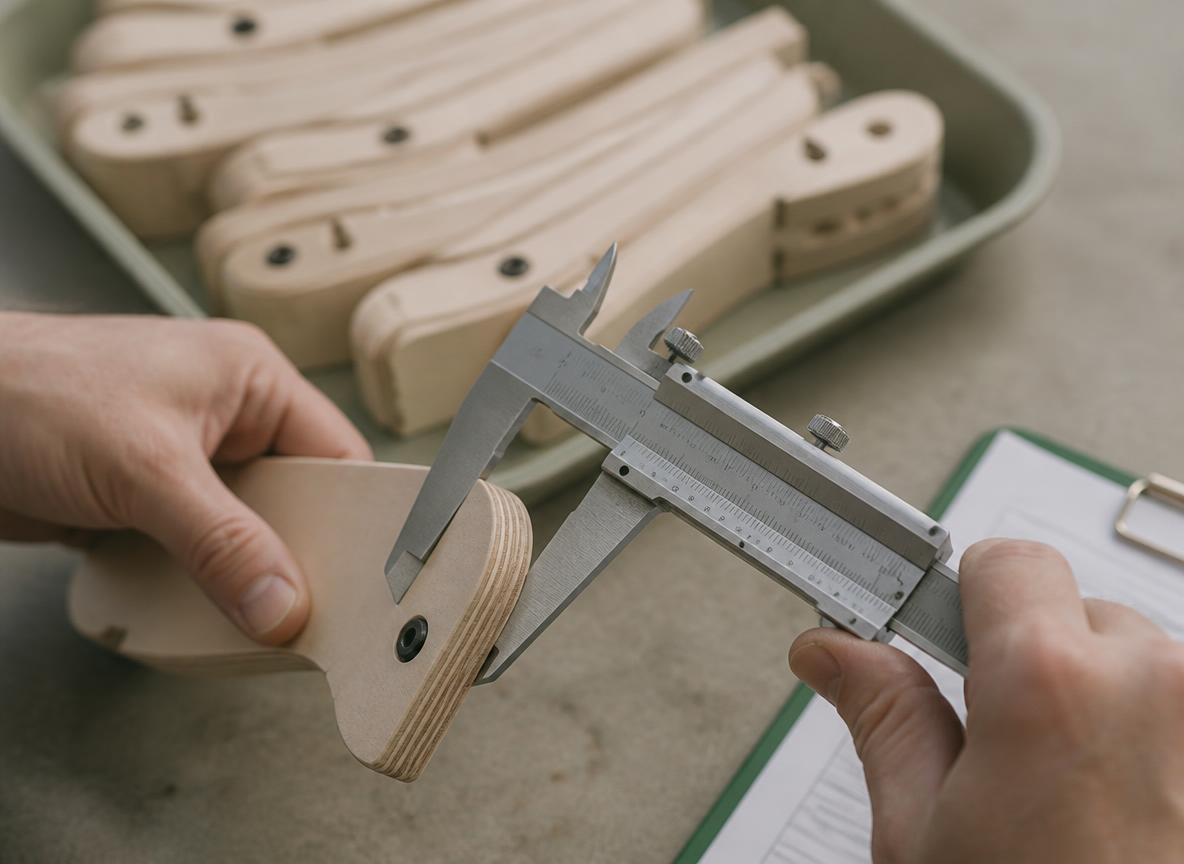
Inspection · dimensional check
Sample
8 of 250
Tolerance
±0.2 mm
PassHold
Recorded against the batch, not a signed sheet in a folder
For warehousing
Know where the stock is before someone asks.
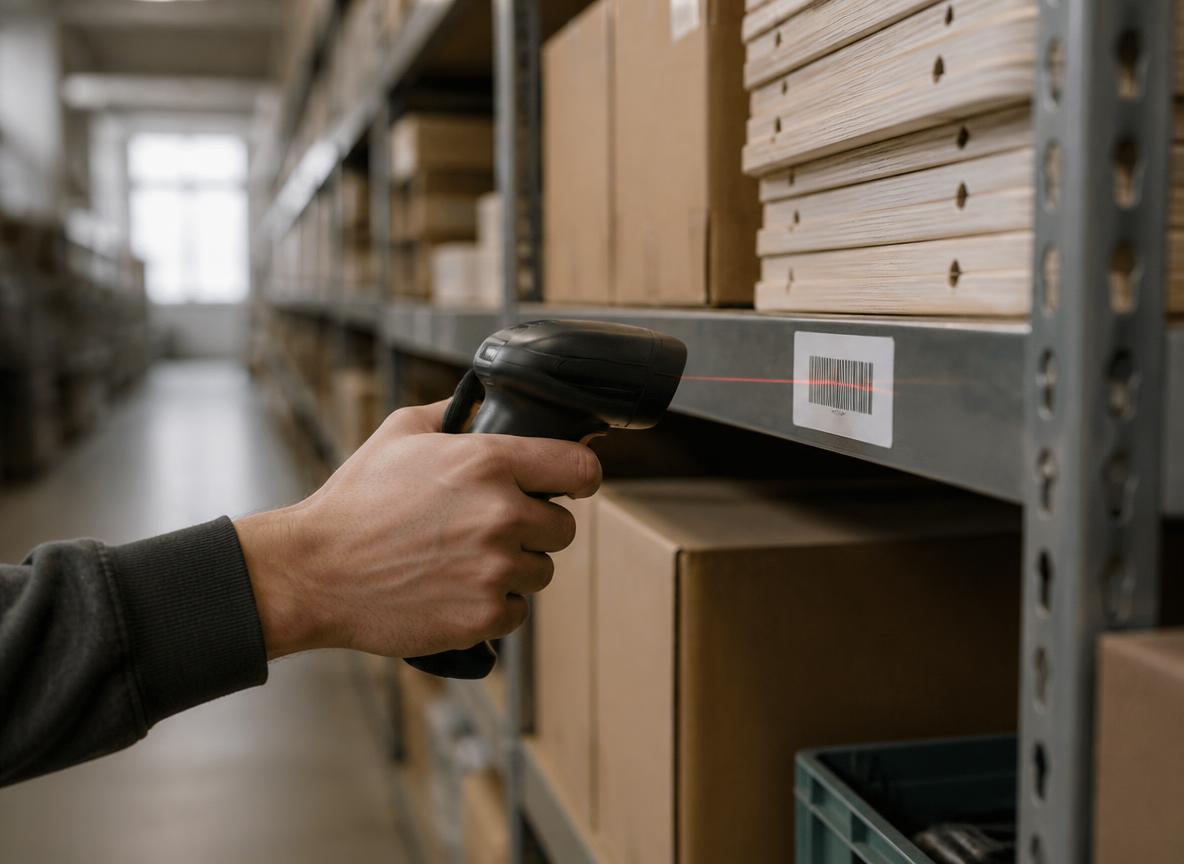
Not a 3D warehouse with spinning pallets. A map of bins, a scanner
in someone’s hand, and a number that is right because it was
recorded where the work happened.
empty stored in motion
Handheld09:41
Scan location
A-03-17
✓Location confirmed
One job, end to end
The same order, in five places.
SO-4471 is the order the rail above was carrying: three hundred
units for Ashgrove Ltd. It passed through five sets of hands and
nobody retyped it once. Every code below was already in the system
before anyone thought to ask where the job had got to.
Order receivedSO-4471
On the floorWO-2418-3
Quality checked240816-B
PickedPICK-7741
DispatchedTR-5507
Show us the mess
How does this happen today?
Pick whichever is closest. There is no wrong answer here, and the
last one is the most common.
Tailored, not custom everything
Built around your workflow. Not around a software demo.
We don’t start by showing you forty-seven features. We start by
asking how work moves through your company today, and then we
watch. The answer people give and the thing people do are rarely
the same.
01
Understand
We map the process as it actually runs, including the parts that
only work because someone remembers to check.
02
Simplify
Not every existing step deserves to survive digitisation. Some
exist because a system used to be slow, and the system is gone.
03
Connect
Then we build around the improved workflow, so the system fits
the business rather than the other way round.
Same work, fewer crossings
How it runs
No six-month mystery project.
We won’t put a timeline on this page, because a timeline written
before anyone has seen your process is a guess with a number on
it. Here is the shape of the work instead.
Step 1
Map the workflow
We sit with the people doing the work. Not only with the people who describe it.
Step 2
Remove unnecessary steps
Digitising a bad process gives you a fast bad process. We take that part seriously.
Step 3
Build the first version
Starting with the workflows that create the most friction, so the benefit is obvious early.
Step 4
Train the team
The system only works if the people using it are comfortable. That is a real part of the job, not a handover email.
Step 5
Improve it
The first version is not sacred. It is the version that teaches everyone what the second one should be.
The software underneath
We often build on Odoo. It is the foundation, not the point.
Inventory · Stock on hand3 items
ProductOn handForecastValve housing30030018 mm sheet42−33Pump assembly8686
Reordering rule
Min75
Max250
Order208
Lot / serial
240816-B
Tracked to dispatch
Odoo gives us a broad set of business building blocks: inventory,
manufacturing, purchasing, sales, accounting and CRM. So we are
not rebuilding a stock ledger from scratch just to solve a
receiving problem.
Its documentation covers multiple warehouses and replenishment
between them, receipts and deliveries in one, two or three steps,
reordering rules, make-to-order and a master production schedule.
Manufacturing works the same way, in one, two or three steps, with
lot and serial tracking. Receipts, transfers, adjustments and RFID
can all be driven by barcode.
ToolsSync is the layer that makes those blocks fit your business.
That is the part that decides whether anyone actually uses it.
Layer 03How your business actually worksUnchanged
Fitted to
Layer 02ToolsSync: configuration, connections, trainingThe part we do
Good systems don’t have to come with a giant implementation
bill.
We are not going to claim a percentage. What we can do is show you
the bill itself, because the difference is not a discount we are
offering. It is a set of costs we do not have.
At an agency0 lines
Account management
Project coordination
Status meetings
Briefing the designer
Briefing the developer
Rework after the handoff
The build
With us0 lines
Understanding how the work runs
Configuring what already exists
Customising the few places it pays
Training the people who use it
What the build is made of
01 Your tools
02 Understand
03 De-duplicate
04 Configure
05 Customise
06 Train
07 Hand over
We use proven building blocks where possible and customise around
them only when it genuinely improves the workflow. Every custom
piece is something somebody maintains later, so it has to be worth
it.
Less rebuilding. More configuring.
Less software sprawl. More connected work.
Less admin between people.
Everything above is about what happensbeforeafterbeforean order exists.
Everything above is about what happens after an order exists.
This part is about what happens before one does.
Where it comes from, and who answers.
yourcompany.nl/shop
In stock0
SO–4471In the warehouse’s own list
A shop that sells
Customers order from you directly, and it arrives where your
warehouse is already looking.
A site that shows the company
For the customers who do not check out online, but who decide in
about eight seconds anyway.
Something that answers
An assistant for the site and the phone.
In development.
Usually on the first call, usually in this order, and usually
before anyone mentions software.
No. The first step is working out what is worth keeping. Some tools are doing a good job and should simply stop being re-typed into. We connect or replace things only where it actually improves the workflow.
Manufacturing and warehousing are where we are starting, because that is where handoffs pile up fastest. The same approach works wherever work moves through repeatable processes, approvals and handoffs.
No. Smaller teams often benefit more, because the same few people are handling sales, purchasing, stock, operations and admin. When one person is the handoff, removing a step gives them their week back.
Yes, and that is the starting point. We look at how you work today, then identify what should stay as it is, what should change, and what can happen automatically. We are not trying to make your company look like a demo.
The system should be shaped around the business. But we avoid customising for its own sake: every custom piece is something to maintain later, so it has to earn its place by removing real friction.
We often build on Odoo because it covers a lot of ground out of the box: inventory, manufacturing, purchasing, sales, accounting and CRM. But the conversation starts with your workflow, not with a subscription. If a different foundation fits better, we will say so.
Yes, and it is usually the right way to start. Picking the workflow that causes the most friction proves the approach on something people already care about, and it means the team learns the system on familiar ground.
Questions1 / 7
Last thing
Let’s sync.
Tell us how work gets done. Send us the workflow that currently
lives in a spreadsheet, an inbox, a WhatsApp group or someone’s
head.
One workflow is enough to start a useful conversation
Sent
Your enquiry has reached us.
We will come back to you within 24 hours on a working day. Twenty
minutes and one workflow is all the first call needs.